Posts

Showing posts with the label social memory

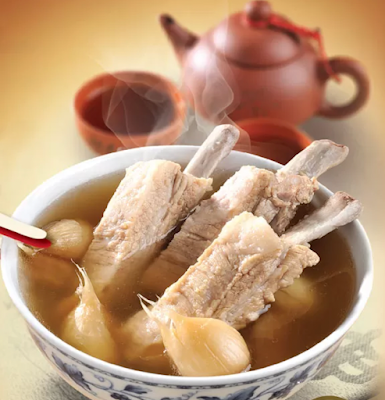
Perceiving History with a Bowl of Bak Kut Teh
Image
  One of the themes of Palace of Ghosts is historical perspective and memory. I argue that this is a good thing because a shared sense of place and history is a key ingredient to the collective consciousness and collective self-confidence, both of which are vital qualities that help us face uncertainties that the future might hold. The overall result may be peace of mind and happiness. I reason that the more history communities can connect to in a positive way, the greater the sense of well-being. I also quote Winston Churchill when he famously once said, “The longer you can look back, the farther you can look forward”. While this might sound obvious, the challenge can be that we are often unable to see clearly into history because we have a habit of compartmentalising it. We erect figurative screens, either consciously or unconsciously, that can block out episodes from the past. Worse still, sometimes such episodes are erased from history, creating a strange gap in the record. On...
District 10, Tanglin and the Story of William Napier

Image
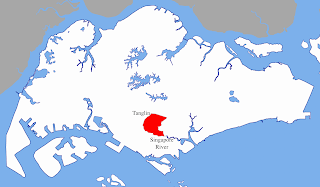
Within Singapore's District 10, there is an upmarket neighbourhood named Tanglin. Much of the story of Palace of Ghosts takes place here. While the meaning of Tanglin is believed to be derived from the Teochew Chinese language, meaning “great east hill peaks”, the neighbourhood took its name from a house that was called Tang Leng, built by William Napier in 1854. The location of Tanglin, indicated in red, can be seen on the map of Singapore below.  Historically, this was the first suburb outside the original settlement located around the Singapore River to its southeast. It was considered a desirable location because it was away from the noise, dust and smells of the crowded settlement. It was green and the climate was thought to be better than in the coastal areas. It was reached by Orchard Road which was a track first put down during the 1830s and gradually improved thereafter. As the name suggests, the area was previously used for orchards and plantations, the latter being main...

Why Did I Write Palace of Ghosts?

Image
This is a question I am often asked. It is also one that I have also pondered at length. It took me a while to work through the reasons, but I only did so after I had completed the first manuscript. My thought process did not follow a logical, sequential trajectory. I did not, for example, initially identify the reasons I might embark on such a course of action, then weigh up the pros and cons, and then evaluate whether or not to proceed. Rather it was fact a gut feeling. I had to write the story, and the more I researched, the stronger that instinct became. It was only tens of thousands of written words later that I attempted to rationalise why I had done it. The main reasons are those I have set out below. But it’s not an exhaustive list, and I may well come back to these points in a later post. The lure of an untold story . I believe that it is possible to sense history even if there appears to be a gap in the record and you don't know what the missing detail is. There is a deep...

Step Inside the Story of Palace of Ghosts

Image
Welcome to the official Blog for my book Palace of Ghosts . This series of posts are going to be timed for the prelaunch and post launch of Palace of Ghosts : Singapore's Untold History. They are intended to provide readers with information about the author, about the creation of the book and a look behind the scenes that will provide additional and rich content related to the book's characters, events, locations. I intend to add news stories and other items that may arise and that turn out to be linked to the story. In the heart of Singapore there is a patch of heavily forested land: it is private property and strictly off limits. Anyone caught trespassing risks arrest and a heavy fine. It is a strange and inaccessible place that harbours secrets and mystery. One of the biggest mysteries is why it is even there? Singapore has the third highest population density of any country in the world. It is severely land constrained and the government is pretty good at managing what land...